We are in very interesting times and what our future may look like endlessly fascinates me. I merely consume lots of great thinking from others. I wish I were smart enough to formulate a unique theory. Our potential, or maybe likely future, boggles my very average mind. And there are some wild ideas about the world we will live in and what it might look like in the not-so-distant future. Some of those potential scenarios are very optimistic, but many paint potentially dark and scary outcomes. This is a personal exploration of some of that thinking and my humble guess at our future.
Religion is also a topic I find to be very fascinating. I think there is a corollary to our future. Why are we religious? What has been the impact on our history and how is it impacting individual behavior in our quickly changing culture and society today? I think the battle of religion against science and reason has yet to play itself out. I believe that religion’s purpose, need and usefulness is eroding quickly; arguably its usefulness is already behind us but we have yet to recognize this as a whole. Will there be some reckoning where things come to a head or does religion fade away during this century? Maybe religion becomes reconfigured because we have an innate need to belong to something that is greater?
Recently I watched an episode of the National Geographic show called “The Year Million” which was a series that focused on many theories and aspects of what mankind will look like in the year million; a long way from 2017. One episode called "Dude, Where's My Body?" suggests that in the not-so-distant future, we will be able to load our minds and lives into a digital state and vacate our biological life. This is what they called the Metaverse. This theory resonates with me for a number of reasons.
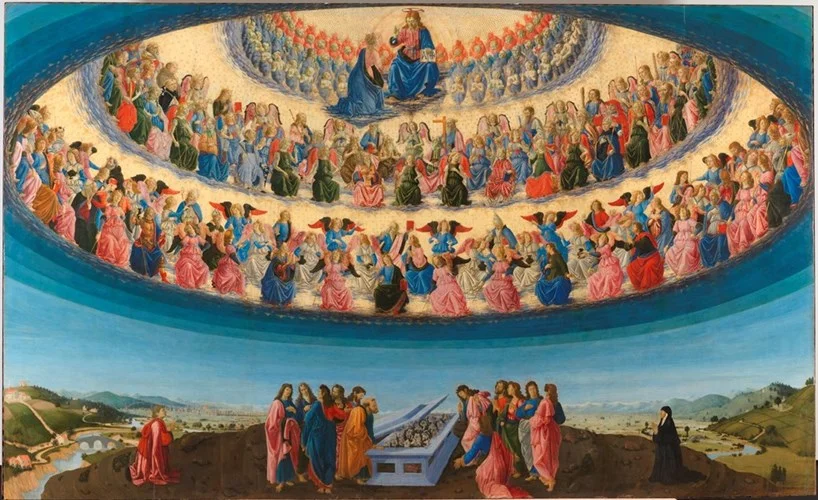
What is the Metaverse? Good question. However, before we answer that question, let us start by making sure we have somewhat of a baseline on the characteristics of Heaven; mostly as a concept. Before I define this, I must state that I am no theologian nor am I religious. That being said, from my perspective, heaven is a state that humanity can go to if they are deemed to qualify by their God. We vacate our earthly bodies and live in a higher state with all the others that came before us and have been good or deemed worthy. An afterlife is the essence of this concept and is found in most religions. We live in the 'House of God' and historically, the heavens have largely been portrayed to be above the clouds and beyond Earth; consistent with what our knowledge of the world was 2000 years ago. We remain there for eternity in a virtuous state. Certainly not a perfect description but I think this hits the major elements. This desire for an afterlife or some aspect of immortality is found in most religions. Of course, this gets to our core fear as mortal humans, that life is finite. I certainly do not want to die.
Another thing to think about is that there is also an alternative to heaven in most religions. We of course refer to this as Hell; primarily a Christian concept. There does seem to be a binary choice in all religions split by good and evil. What is also an interesting condition is that while we often refer to all life on Earth as ‘all living creatures of God’, Heaven and Hell in many religions are reserved for only human life.
Now the Metaverse is a ‘virtual reality’ in which users not only interact with but also enter and live in a computer-generated environment. And like Heaven, we vacate our Earthly bodies and go into a higher state; in this case, a virtual and digital world. The Metaverse today would require several evolutionary steps from a technical, biological and energy perspective. With the growing speed of our technical capabilities, I suspect the Metaverse will become a reality in the next fifty years. We would, in theory, be able to remain in the Metaverse for eternity. You would be able to interact with all other humans who have also entered the Metaverse. The similarities between the core elements of Heaven and the Metaverse are substantial, with the exception of two key points: the first is that man will create the Metaverse and God created Heaven, and second, Heaven is not real and the Metaverse will be.
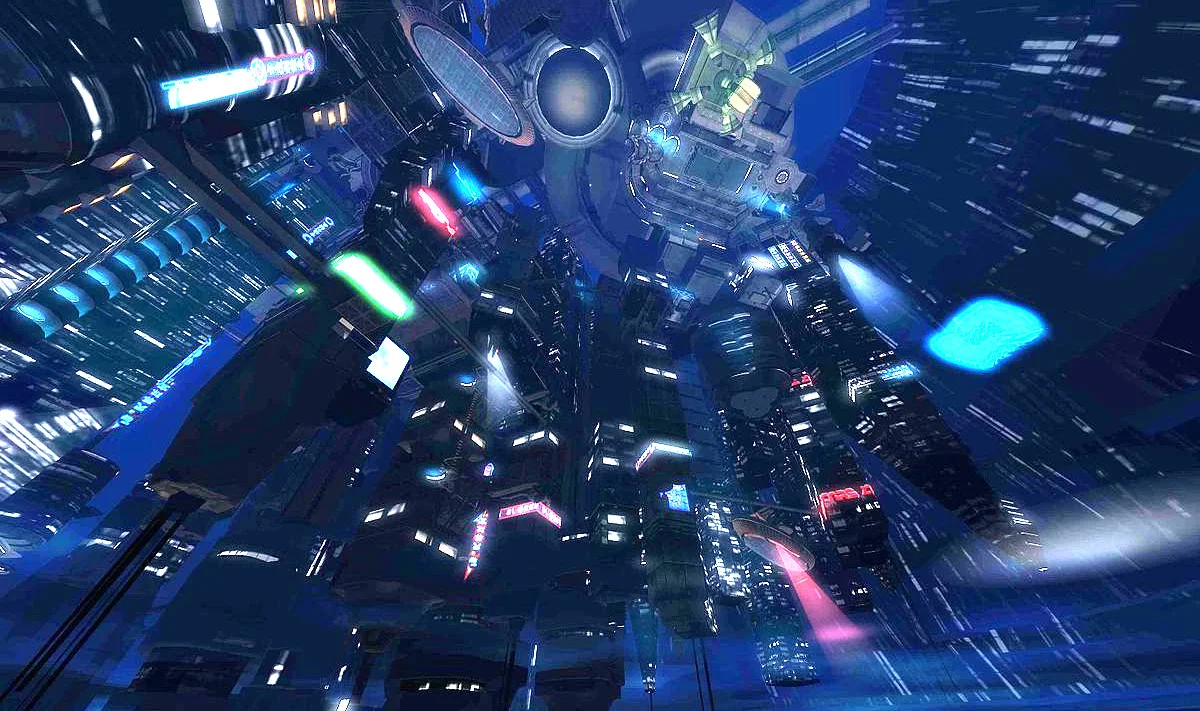
The Metaverse is a collective virtual shared space, created by the convergence of virtually enhanced physical reality and physically persistent virtual space, including the sum of all virtual worlds, augmented reality, and the internet.
Now, the likelihood of the Metaverse I think is high. What is uncertain is how virtuous it will be. First, I believe the only way the Metaverse does not become a reality is if mankind self-destructs before the technology needed to make the Metaverse becomes a reality. In respect to what the Metaverse will be like is also dictated by the fallibility of the human condition. There may be no overriding virtuous and high moral standard governed by a God in the Metaverse. There is a real possibility that the Metaverse may contain both Heavenly and Hellish-like conditions because there is not a single God-like force directing and controlling good morality. The simplicity of the binary choice between good and evil being judged by an all-knowing God is aspirational. What is concerning is that a world created by the frailties and complexities that exist within the human condition puts the likelihood that the Metaverse is heavenly in question, and may even be certain. This could be a key difference between the Metaverse and Heaven. I think there is a real potential that the Metaverse embodies both Heaven and Hell. If this is the case, then the Metaverse could mirror our life on Earth. If this were the result, then the only advancement would be immortality.
My quick view of religion is that it allowed us to make sense of a world that we did not understand. We lived in a world where there really was only one truth, and that was death. You can view this mortal reality in two ways: that there was finality and everything ended, or there was some next step after this life. This next step is aspirational and I think embedded in what makes us human. Additionally and maybe more importantly, the potential of moving to an afterlife provides a control mechanism for those who ruled. To create a possibility that there was a next step, mankind was able to impose a morality condition that was beneficial in controlling the growing masses in a time where there was limited opportunity to impose control on humanity in an overarching manner. However, as we grow smarter and gain more knowledge about our world and the Universe beyond, the likelihood of a God, Heaven and Hell, and all that goes with religion becomes less reasonable, rational and necessary.
In turn, we are growing and evolving to allow us to get to a point where we will be able to shed the limitations of biology and become immortal. I think the Metaverse is a near-certain future; barring the potential that our self-destructive ways don’t get the better of us first. What the Metaverse looks like when we get there is significantly less certain. The core decision or eventuality boils down to whether the Metaverse will be just good, like Heaven, or human nature will create a condition where there is good and bad, much like our historical mortal life. There are a lot of questions that we must contemplate in the Metaverse. Is the Metaverse an event horizon? Or is evolution finite or infinite? Is the Metaverse the end of humanity? Or will we have a mortal coil that is our umbilical cord to humanity in the Metaverse? What will the process of entering the Metaverse be like; gradual or a quick download? What will our sensation of this new world be like? One could presume that because there will be the capacity to shed the limitations of our current world this new reality will be many times more sensational than what we know today. May be infinitely more sensational, and will that be good or bad, Heaven or Hell?
I will certainly spend the rest of my days observing and exploring how likely the Metaverse will be in our future. From a personal perspective, I suspect that I will unlikely be able to take advantage of a life in the Metaverse. I suspect I will be on the outside looking in on this opportunity. And for someone who does not want to die, I find the cruel and personally disappointing. The only silver lining is that I believe my children will have the opportunity to enter the Metaverse. And I hope it is Heavenly. I find it ironic that it is very likely that the fiction our ancestors created will essentially come to fruition as a result of our evolution and making.